
Horror 15 min
Little Hands
Some houses don't preserve the past; they bury it within their walls. And some little hands keep knocking at your door until they're found.
Little Hands
Dubbing : ElevenLabs
In this house, the past comes knocking at your door with little hands.
Sare held Fetih's hand and gazed at their new house with her eyes wide open.
“Fetih, is this house ours now?”
“That's right, my love. This is going to be our new home.”
Sare rested her head on Fetih's shoulder and sighed contentedly.
“It's going to be wonderful. I can feel it.”
Before them stood an old wooden house in a small village in Çınarcık, a district of Yalova far from the crowds of Istanbul. No one had opened its doors for years. Although ivy had spread across every neglected surface, the carved woodwork visible through the leaves, the tall windows and the spacious veranda still retained all their splendour. Time had been merciless to the building. With its broken windows, darkened walls and worn-out roof, it looked as though it would give the couple plenty of work.
But Sare saw an entirely different picture: colourful curtains, pink shutters like something out of a fairy tale, and children running around the garden...
What Fetih saw was quite different: walls that needed cleaning, a roof that needed replacing, and a garden that needed renovating from end to end.
Fetih had inherited the house from his uncle. Since his uncle had no other relatives, the inheritance was rightfully his.
Fetih and Sare had met at university and, after a long courtship, crowned their relationship with marriage. They had been married for two years. They had only recently begun their working lives. Struggling to pay rent, they had started dreaming of a home of their own. That was why the inherited house seemed like a tremendous opportunity that had appeared when they least expected it.
It was clear the house would cost a great deal to repair. From the roof to the garden, from the walls to the windows, so much needed attention. Even so, tackling all that seemed far easier than buying a new house. All they needed was some money, plenty of hard work and a few months of patience.
When everything was finished, they would finally have a home that truly belonged to them.
Although the house was far from their workplaces, that appealed greatly to Fetih, who wanted a peaceful life. After work, they could live quietly in their home, away from the city's turmoil. And when they had children, there would be a wonderful garden for them to play in.
***
To speed things up, Fetih had taken a few days off work and come to the village to oversee the repairs. First, he needed to find several tradesmen capable of handling all the work.
When he stopped at the coffeehouse near the entrance to the village, it was quite crowded. The moment he stepped through the door, the murmur he had heard just before suddenly ceased. The men sitting around the tables turned their heads towards Fetih, as though trying to work out who the stranger among them was.
In the silence, a teaspoon gave a faint clink. When that, too, stopped, an odd stillness settled over the coffeehouse.
“Selamünaleyküm.”
A few people reluctantly returned his greeting.
Fetih sat at an empty table. Before long, the coffeehouse owner placed a glass of tea in front of him, narrow at the waist.
“Welcome, son. You're a stranger here, aren't you? I haven't seen you around before.”
Fetih answered while stirring his tea.
“Thank you. Yes, I've come from Istanbul.”
The owner leaned his arms on the empty chair opposite him and listened.
“So what brings you to our village?”
“I have a house here. Well, I inherited it. My wife and I have decided to move to this lovely village.”
“Ah! The village headman was saying something about that the other day.”
An elderly man at the table by the window asked:
“Which house did you say, young man?”
“An old wooden house. What was the street called? Just a moment, I'll remember.”
After thinking for a while, he answered.
“On Yediveren Street.”
The man who had asked bit his lip, nodded almost imperceptibly, and then, without saying anything, turned thoughtfully towards the window.
This time, Fetih asked him:
“Do you know who lived there before?”
The man showed no reaction to the question.
The coffeehouse owner answered:
“That house has been empty for as long as I can remember. I doubt anyone knows much about it.”
Suddenly, the old man pushed his chair back. The harsh scrape of its legs against the stone floor was enough to make everyone in the coffeehouse turn towards him. He picked up his jacket and headed for the door without a word.
Fetih followed him with his eyes.
The old man's face was far more tense than before. As he went out, his lips kept moving. He was murmuring something. Fetih couldn't hear what he said, but he didn't particularly care.
***
Fetih's days off were limited. So rather than have the jobs done one after another and wait for weeks, he had brought several tradesmen into the house at the same time. While the roof was being repaired, broken panes were replaced, and the walls of rooms untouched for years were scraped and replastered.
He wanted to make the house habitable as quickly as possible and move in with Sare straight away. The renovation had already cost more than he had expected. On top of all that expense, he didn't want to keep paying rent unnecessarily on their place in Istanbul.
For the first few days, the house filled with noise, as though trying to shake off the silence it had accumulated over the years. Hammers echoed through the rooms, the hum of drills made the wooden walls vibrate, and the workers called to one another as they hurried from room to room.
Dead branches had been pruned in the garden, most of the ivy torn from the walls, and windows that had remained shut for years opened one by one. With each passing day, more of the house emerged, and the building became more liveable.
While the workers were busy inside, Fetih cleared the dry branches, leaves and years of accumulated rubbish from the garden. At one point, feeling that he was being watched, he raised his head.
Someone was standing at the garden entrance.
Fetih narrowed his eyes and recognised the man. It was the old man from the village coffeehouse, whose expression had changed the moment he heard the name Yediveren Street. He stood motionless, staring at the house. His lips were moving again.
Fetih dropped the branch he was holding. He remembered the man doing the same thing at the coffeehouse. He was murmuring to himself, but from that distance it was impossible to make out the words.
“Uncle!”
The old man abruptly stopped moving his lips. Fetih took a few steps towards him. Realising he had been noticed, the man turned and hurried back the way he had come.
“Wait a minute! I want to ask you something!”
The man didn't even look back. Fetih went as far as the garden gate and watched him leave. He considered running after him, but he had so much work to do... A few seconds later, the old man turned the corner and disappeared.
“Strange fellow,” he thought. He turned to look at the house.
“Once all this work is finished, I'll find out what his problem is.”
He went back to the branches he had left on the ground and carried on working.
The two-storey house also had a basement. But its renovation had been postponed until after they moved in. Their priority was the upper floors. The building's load-bearing structure had been inspected and no problems found. For that reason, they would leave any areas that did not require urgent attention, including the basement, untouched for now.
The basement door was shut, and the workers continued upstairs. Those parts would simply be used for storage for the time being. After all, they had plenty of time ahead of them.
***
Sare hadn't visited the house at all during the renovations. Today, however, everything was finished except the basement, and all that remained was for their belongings to arrive.
As they stood together at the garden gate looking at the house, something caught Sare's attention. She fixed her gaze on one spot and frowned.
Fetih looked first at his wife, then in the direction she was staring.
“What's wrong?”
“I thought I saw something in the upstairs window.”
She shook her head from side to side and continued:
“Probably the shadow of a tree. Never mind. Come on, let's go inside.”
When they entered together, a wave of warm air struck their faces. Everywhere smelled of fresh paint.
Sare turned to Fetih and asked, “Isn't it very hot in here?” Fetih nodded. “Yes, actually, it's really hot.”
They opened the windows in each room to let the smell of paint disperse. When Fetih went into the kitchen, he noticed that the paint had stuck the window to its frame. He tried forcing it a few times. When it wouldn't open, he pulled harder towards himself.
Suddenly, one of the hinges came loose. Before Fetih could understand what was happening, the full weight of the window sash was in his hands.
“Oh, damn it!”
Trying not to break the glass, he carefully set it on the floor. Looking at the dislodged hinge, he saw that the wood had rotted over the years. He began cursing the workers.
“I told them fifty times to check all the windows.”
Turning to Sare, he said, “You look around the other rooms. I'll sort this out, or a bat will get in tonight and make a mess of the place.” He fetched his toolbox and set about repairing the window.
Sare wandered slowly through the house, examining each room in turn. She could barely contain her excitement. Their bedroom, the children's rooms, the guest room... She had already decided exactly where everything would go.
It had grown quite dark. They needed to finish what they were doing and tidy up as soon as possible. Only one room remained. Sare switched on the light and went in. After checking the room, she walked towards the window. As she saw her reflection in the glass, she noticed something else in it.
Just beside the door, beneath the electrical socket, a little girl was looking at her.
She immediately turned around, but there was no one there. When she looked back at the glass, the child was still there. She froze where she stood. She could neither move nor tear her eyes from the reflection. The child was staring straight at her.
Sare turned around quickly. Again, no one was there. But when she looked back at the glass, this time the child had gone. Sare ran downstairs, but said nothing to Fetih about what she had seen.
“Fetih.”
“Yes?”
“Who used to live in this house?”
“I don't know. I've never thought about it. But the coffeehouse owner said he hasn't seen anyone here for years; apparently it's been empty all that time. Just look at it—if we'd waited much longer, the house would have turned into a fossil. Why do you ask?”
“I don't know. I was just curious.”
Sare said nothing about the child she had seen, and Fetih said nothing about the mysterious old man. This house was going to be their warm, welcoming home. Neither wanted to spoil the magic of that thought.
***
Within a few days, the couple had moved in completely. Their previous home had been half the size, so settling in wasn't particularly difficult. Most of the rooms were still empty. But they dreamed of filling them with their children one day. Both now felt that the time had come to start a family.
The days passed, and four months had gone by since they moved in. Under medical supervision, they had stopped using all forms of contraception to put their plans for a child into motion. All that remained was to wait.
Sare had never seen the little girl from that night again. In fact, her days in the house were so happy that she no longer even remembered that frightening moment.
One day, before Sare could finish her meal, she sprang from the table and rushed to the bathroom, where she vomited for several minutes. She couldn't bear any smells and felt constantly nauseous. She began to suspect she might be pregnant.
She took one of the pregnancy tests she had bought after work and went into the bathroom. After reading the instructions on the box, she followed them and began to wait. She placed the test on the sink, checked her watch and waited for the required time to pass.
When the time was up, the result she had been hoping for was right before her: she was pregnant.
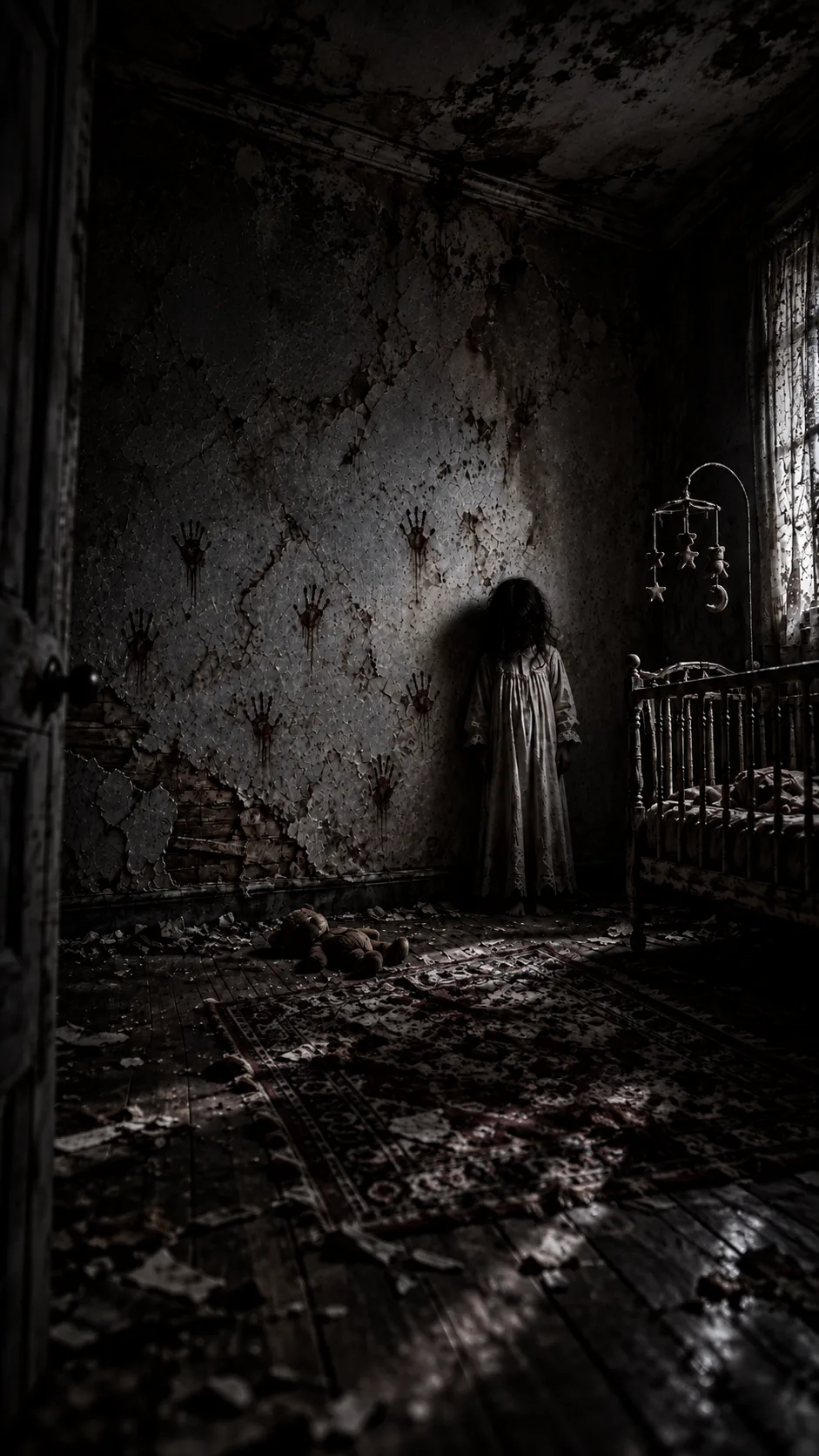
The moment she turned joyfully towards the mirror, all her excitement vanished. The little girl she had seen months earlier was staring at her from the mirror. Sare froze in terror. The child, with her long black hair and white nightdress, stood before her without taking her eyes off Sare's.
She quickly shut her eyes. When she opened them again, there was no one in the mirror. She ran to the kitchen and immediately drank a glass of water. She didn't use that bathroom again all day. In fact, she tried not even to go near places with mirrors.
She shared the happy news with Fetih, and they spent the entire day dreaming together.
That night, as Sare was going to the kitchen for some water, she noticed tiny footprints on the floor of one room and small handprints on the walls. It was as though a child of four, perhaps five at most, had wandered around the room with wet feet, touching the walls.
She ran to wake Fetih. But when they returned to the room together, the marks had disappeared. As they both tried to find the footprints on the floor, Sare noticed a shadow pass through the gap in the doorway. She hurried in that direction.
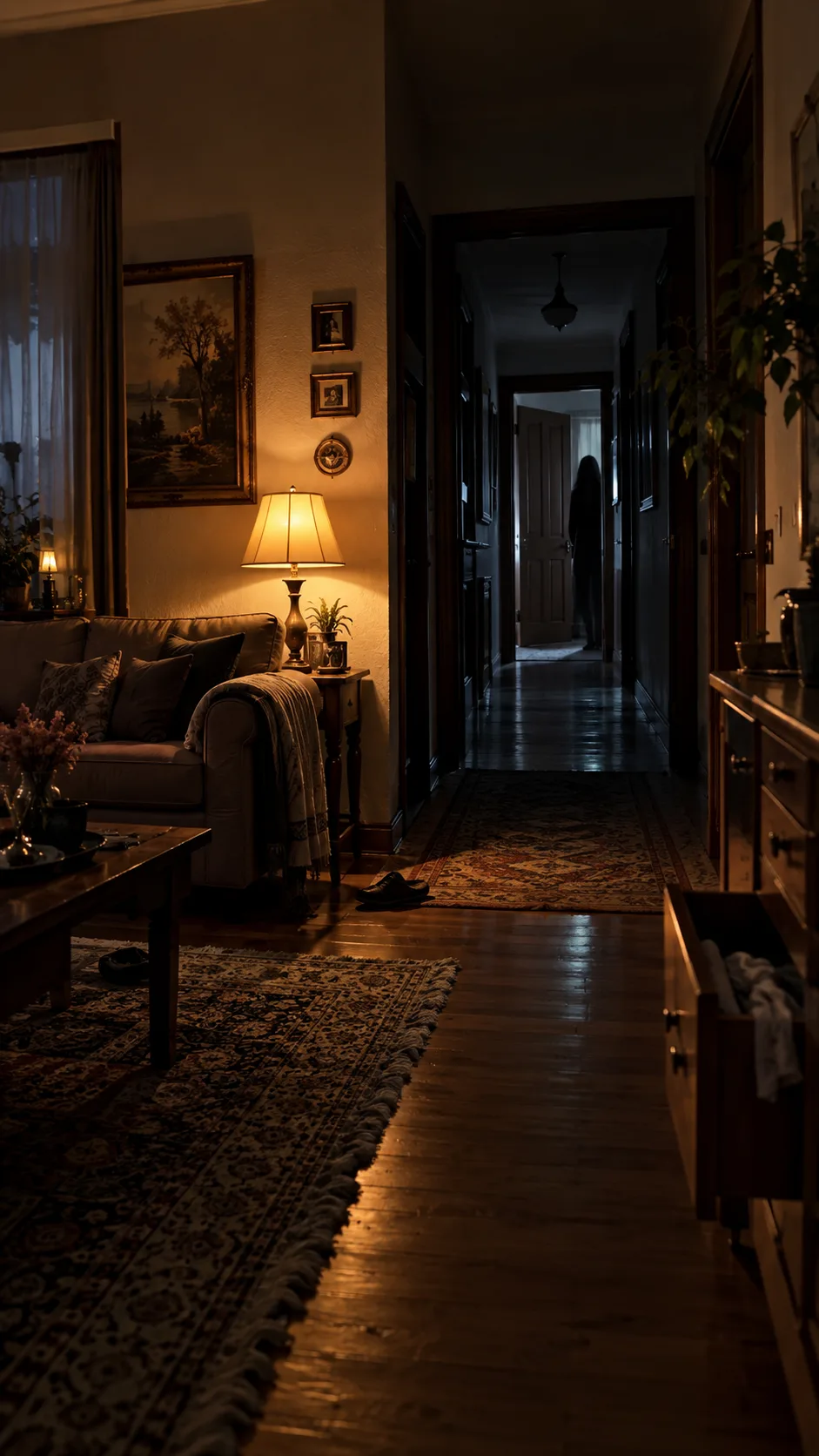
When she stepped into the corridor, she stopped dead. The same little girl was walking slowly through the house.
Sare began following her silently. The girl went down the stairs and approached the basement door. She stopped in front of it and stared at it without moving for a while. Just as Sare thought she was about to enter the basement, the little girl suddenly turned left. She walked towards the living room and disappeared into the fireplace.
Sare was stunned. She began reciting prayers silently. She didn't sleep another wink that night.
The same things continued to happen over the following days. The little girl would appear before Sare, then slowly walk into the fireplace and disappear.
After a while, another child began accompanying the little girl. The following week, another appeared... Their numbers grew with each passing day, and all of them walked towards the fireplace in the same way. Eventually there were seven children.
Although Sare had been terrified by what she saw at first, she had grown accustomed to it because they never made contact with her.
She was now four months pregnant. She had taken leave from work and begun preparing for the little addition to their family. Fetih, meanwhile, did everything his wife asked and tried not to let her tire herself out.
He noticed how uneasy she was at night. He saw her wake with a start, sometimes staring at a corner of the room for a long time. Whenever he asked what was wrong, Sare changed the subject. She thought Fetih wouldn't believe her if she told him what she had seen.
One night, she woke suddenly again. When she lifted her head from the pillow, she saw the children. This time, they weren't in their usual places. They had gathered in front of the bedroom window, clinging tightly to one another. Their eyes were wide with fear. Their little bodies were trembling faintly.
Sare had seen them so often by now that their presence no longer frightened her as much as it once had. But this was the first time she had seen the children afraid. A terrible feeling came over her.
She anxiously nudged Fetih, who was sleeping beside her.
“Fetih, wake up. Something's happening.”
Fetih struggled to open his eyes.
“What happened?”
Sare didn't answer. She was sitting upright in bed, watching the children. At that very moment, an unbearable smell reached her nose. It was a sickening, heavy odour of rotting flesh mixed with damp earth. Sare covered her mouth and retched involuntarily.
Fetih immediately sat up and moved closer to his wife.
“Sare? Are you all right?”
But then he fell silent too. He had smelled it. Sare could tell from his face. His sleepy expression had vanished instantly.
Then one of the children began to cry, followed by another, and then all of them. Sare's blood ran cold. It was the first time she had heard their voices since the day she first saw them.
One of the children turned towards Sare while still clinging to the others. The terror in the child's eyes was so great that Sare couldn't breathe for several seconds.
“Help us!” the child cried.
“It found us!”
Sare sat up in bed.
“Who found you?”
The crying stopped at once, and all the children fell silent together. Their expressions froze. It was as though an invisible hand had turned their bodies to stone. They were all staring at the same point behind Sare. Following their gaze, Sare saw something standing in the doorway.
Its long, crooked body was barely visible in the darkness. Its arms were far too long for its body. At the ends of its fingers were black claws that curved inward. It turned its head and looked at Sare. Two red eyes glowed out of the darkness. Sare held her breath. Her heart was pounding as though it might tear through her chest. Fetih looked around, unable to understand what was happening, asking question after question.
The being placed its long-clawed hand on the edge of the doorway. It began walking slowly into the room. Just as it was about to reach the children, Fetih quickly pressed the light switch.
The room flooded with light, and they all disappeared.
The children were gone, and so was the terrifying being in the doorway. The room was completely empty, as though no one had been there only seconds earlier.
Sare stared at the door without blinking. Her breathing was ragged. Fetih stood beside the bed, looking at his wife in bewilderment.
“Sare, what's going on?”
“Wait. Let me pull myself together, and I'll tell you everything.”
Whatever that thing was, it seemed likely to return.
Through tears, Sare told her husband everything she had experienced over the past months. Then she added:
“Why were the children so frightened? What was it going to do to them?”
“For God's sake, Sare, is that what you're worried about right now? Our house is overrun with jinn, fairies and spirits, and that's what you're concerned about?”
“But those children were harmless.”
“How do you know? You can't trust things like that.”
“I just know.”
“I still can't get that smell out of my nose, Sare. That man at the coffeehouse... He might know something. First thing tomorrow, I'm going to find him.”
The next day, Fetih and Sare waited for the man at the beginning of the road leading to the village coffeehouse. Despite Fetih's insistence, Sare refused to leave him alone. Evening was approaching. When they caught sight of the old man on the village road, he tried to change direction as soon as he saw them. Fetih called after him.
“Uncle! Could you wait a minute?”
The man stopped but didn't turn around.
“We need to talk to you about that house.”
The old man slowly turned towards them. He looked first at Fetih, then at Sare.
“I have nothing to say to you.”
Sare stepped forward.
“But we have something to say to you. I see children in that house.”
The man's expression changed instantly.
“What did you say?”
“I see children. Seven of them.”
The old man stared at Sare's face for several seconds.
“Seven?”
“Yes.”
He lowered his head. His lips had begun moving again. Only now did Sare realise he was praying.
Fetih grew impatient.
“You know something. It's been obvious since the first day. What happened in that house?”
The old man took a deep breath.
“I don't know anything myself, son. I've heard things. From my father, my grandfather, the old people of the village...”
“What did you hear?”
The man turned his eyes towards Sare.
“They never told good stories about that house.”
Sare instinctively slipped her arm through Fetih's.
“What kind of stories?”
The old man was silent for a while.
“Once upon a time, women used to come to that house. Women who didn't want the children they were carrying. Those who came in the early months would have their pregnancies terminated there, without anyone hearing about it.”
Fetih frowned.
“In the house?”
“That's what they used to say.”
Sare's hand moved to her stomach.
The old man continued.
“And there were others whose pregnancies were too far along to terminate. Women who arrived heavily pregnant. They would spend their final months in that house and give birth to their children there.”
Sare frowned.
“And then?”
The old man didn't answer.
Sare took a step closer.
“What happened to the children who were born?”
“I don't know.”
“How can you not know?”
“Because no one knows, my daughter. Some of the women would leave alone after giving birth. The children stayed in the house.”
Fetih's face tightened.
“With whom?”
“The people who ran the place.”
“And what happened to the children after that?”
The old man shook his head.
“That's the part no one knows.”
Sare went pale.
“Didn't anyone ever ask?”
“In those days, some things weren't spoken about the way they are today. Especially women who came without their families knowing, children born out of wedlock... Their names weren't even mentioned. The villagers kept away from that house anyway.”
After a moment's silence, Fetih asked:
“But why? Because of the children?”
The old man looked Fetih straight in the eyes.
“I didn't say it was because of the children.”
Fetih frowned.
“Then why?”
The man's lips moved again.
“I told you... They never told good stories about that house.”
Sare lowered her voice.
“What stories did they tell?”
This time the old man didn't answer. He raised his head, fixed his gaze on a point in the distance and thought for a while.
“I don't know what happened to those children. I never wanted to know, either. But when I saw the doors of that house open again after all those years, I couldn't feel at ease.”
His gaze dropped to Sare's stomach.
“Especially not now.”
After speaking with the old man, Fetih and Sare walked back towards the house. Neither said a word. When they reached the garden gate, Sare raised her head and looked at the building. What she had heard about the house she had considered her home for months disturbed her deeply. If such terrible things really had happened here, how could she continue living in it?
As she entered, her eyes fell on the fireplace in the living room. She stopped suddenly.
“Fetih.”
“Yes?”
“I think the children were trying to tell me something.”
Fetih raised his eyebrows.
“What do you mean?”
“The fireplace.”
“What about it?”
“They went there every time. The first girl would stand in front of the basement door, then go to the fireplace and disappear. The others did the same.”
Fetih's gaze shifted towards the fireplace.
“Do you think there's something inside?”
“I don't know. But why do they always go there and nowhere else?”
Fetih thought for a while.
“Something inside me is telling me to get the hell out of here. There's something going on, but let's hope for the best.”
Fetih went over to the fireplace, bent down and looked inside.
“I can't see anything here.”
When he ran his hand over the inner wall, his fingers turned black with soot.
Sare narrowed her eyes and gestured towards the fireplace.
“Maybe it's behind it. Let's break it open. The children were pointing here.”
Fetih straightened up and looked at Sare.
“It's not that simple. This is an old building. We could damage the wall.”
“Fetih, the children have been showing me this place for months.”
“All right, I understand that part. You've told me fifty times. I'll call a tradesman tomorrow. What have we got ourselves into?”
“Not tomorrow!”
Seeing the expression on his wife's face, Fetih looked as though he was about to object, but nothing that had happened seemed normal. He returned with his toolbox and began examining the bricks inside the fireplace. He picked up a screwdriver and tapped the bricks one by one with its handle. When he struck one of them, the sound was different. He tapped it again and heard a dull, hollow sound.
Fetih and Sare looked at each other.
Fetih was thoughtful.
“There's an empty space behind it.”
At that very moment, the lights in the house went out. Sare flinched and grabbed her husband's arm.
“Fetih!”
“The fuse must have tripped. Wait, don't panic.”
Fetih switched on his phone's flashlight.
At that instant, the smell of rotting flesh and damp earth reached Sare's nose again.
“It's here.”
Fetih turned his head.
“Who's here?”
Sare didn't answer. The children had appeared in the living-room doorway. All seven stood side by side. But they weren't looking at the fireplace. They were staring at a point behind Sare. The moment she saw the fear on their faces, Sare's heart began to race. She didn't turn around. She knew that if she did, she would face the same being again. The sound of heavy breathing filled the room. When Fetih shone his phone's light behind Sare, his expression changed instantly. The hand holding the phone began to tremble.
Seeing him like that, Sare whispered:
“You can see it too, can't you?”
Fetih couldn't answer. Two red eyes stared at them from the darkness. The being stood right beside the fireplace, the black claws at the ends of its crooked fingers glinting faintly.
Sare's eyes moved towards the children. The black-haired girl she had first seen had stepped in front of the others.
Sare screamed at the top of her lungs:
“What do you want from us?”
Without answering, the being took a step forward. Sare instinctively held her stomach. The being's gaze shifted briefly to her hands, then back to the fireplace.
At that moment, Sare understood.
“Fetih, break through the fireplace wall!”
“Sare...”
“Break it!”
Fetih picked up the hammer. The being took another step. Fetih struck the loose brick with all his strength. The first blow opened a crack. With the second, a piece of brick fell to the floor. A deep growl, unlike any human voice, rose from the being's throat.
“Keep going!”
Fetih struck again. This time, several bricks collapsed inward at once. A dark opening appeared behind the fireplace.
At the same moment, a gust of wind swept through the room. The curtains billowed and objects on the table were hurled to the floor. Sare shut her eyes and shielded her face. Everything stopped at once. A profound silence settled over the room. When Sare opened her eyes, the being was gone. The children were still there, but they no longer seemed afraid.
All seven children were looking into the dark opening behind the fireplace. Fetih directed his phone's light into the hole. At first he couldn't make sense of what he was seeing, but then all the colour drained from his face. His eyes almost bulged out of their sockets.
“Sare...”
“What is it?”
Fetih didn't answer. When Sare came beside him, she saw it too. Among the dust and fallen bricks lay small bones. And not just one—there were dozens of little bones.
Sare covered her mouth with her hand. Tears began to roll down her cheeks. She turned towards the children. Seven little figures stood side by side, silently watching them.
The girl she had first seen looked at Sare. This time, there was no fear on her face.
***
The police remained at the house throughout the night. The space behind the fireplace was opened up completely. All Fetih and Sare learned that night was that human remains had been found inside. How many people they belonged to, and how long they had been there, would only become clear after the examinations.
Sare didn't want to stay in the house that night. They left the village and checked into a small hotel nearby. Sare only managed to fall asleep towards dawn. In her dream, she saw herself in the garden of the house. It was a sunny day. The garden looked just as she had imagined it when they first arrived. Everything was lush and green. All seven children stood side by side in the middle of the garden. But they were no longer wearing dirty, old clothes. Their faces weren't pale, and they weren't afraid. The black-haired girl she had first seen stepped forward.
Sare walked towards her.
“Was it you?”
The girl nodded.
“You found us.”
Sare's eyes filled with tears.
“What happened to you?”
The little girl didn't answer.
Sare took another step.
“What was that thing? Why was it after you?”
The smile vanished from the girl's face. The other children behind her took one another's hands. The girl looked at Sare's stomach. Sare instinctively placed her hands over her baby. The child raised her eyes again.
“We have to go.”
“Wait.”
Holding hands, the seven children began walking away from Sare.
“Wait! What was that thing?”
None of them answered. Sare called after them.
“Will it come back?”
The black-haired girl stopped. While the other children continued walking, she alone turned and looked back at Sare. A faint smile touched her lips.
“Thank you.”
Then she followed the others. Sare watched until they disappeared from sight.
Suddenly, her eyes flew open. The hotel room was dark. Fetih was sleeping beside her. For a few seconds, Sare tried to work out where she was. Realising it had been a dream, she took a deep breath.
She placed her hand on her stomach.
“You're free,” she whispered.
Just as she was about to close her eyes, the screen of her phone on the bedside table lit up by itself.
It was 3:33 a.m.
As Sare stared at the screen, a faint sound came from the corridor.
Tap.
There was silence for a while. Then it came again.
Tap.
As though the tip of a long fingernail were slowly touching the hotel-room door.
The smile vanished from Sare's face.
Özlem Akgül Altuntaş
7 October 2026
Hikayenin başlangıcı gelişmesi ve sonuca doğru merak uyandırarak sürükleyiciliği çok güzeldi çok başarılı. Sona gelince okuyucunun hayal gücüne bırakmakta çok iyi olmuş. Yüreğine kalemine emeğine sağlık tebrikler…
ÖAÖzlem Akgül AltuntaşAuthor’s reply
Çok teşekkür ederim. Gönlünüze sağlık. Sevgiler, selamlar.